




Włochy mają jedną z dłuższych historii prawa dostępności w UE. Stanca Act poprzedza EAA o około dwie dekady i wciąż kształtuje zamówienia sektora publicznego. Przy tym zestawieniu mocno uwzględniliśmy rzeczywistą obecność na rynku włoskim, bo to znacznie silniejszy sygnał niż ogólna deklaracja zgodności obowiązująca w całej UE.
Jak uszeregowaliśmy tę listę
Sprawdziliśmy udokumentowane pokrycie Stanca Act oraz EAA/EN 301 549, rzeczywistą siedzibę lub obecność na rynku we Włoszech, dostępność doradztwa w języku włoskim oraz to, czy obok automatyzacji oferowane są audyty manualne lub z udziałem człowieka. Nasza metodologia wyjaśnia, jak ważymy poszczególne kryteria, a nasza pełna recenzja AccessiWay szerzej opisuje tę czołową propozycję.
-


Siedziba w Turynie, udokumentowana ekspertyza w zakresie Stanca Act obok EAA i EN 301 549, oraz podejście oparte przede wszystkim na doradztwie ze wsparciem w języku włoskim. Najmocniejszy lokalny sygnał spośród wszystkich opisywanych przez nas dostawców dla włoskiego podmiotu publicznego albo firmy.
Zobacz zalety i wady
Zalety
- Publishes exact widget pricing by page-volume tier, unlike most audit-and-widget competitors
- Combines the widget with expert manual audits, remediation guidance and litigation support rather than automation alone
- Deep specialization in Italian public-sector law (the Stanca Act) alongside EAA and EN 301 549
- Reviewers on G2 consistently mention responsive, hands-on support during setup
Wady
- Platform (audit/monitoring) tier pricing is not published and requires a custom quote
- Very small public review base (single digits on G2), so independent sentiment is thin compared to larger competitors
- Primarily marketed to the Italian and broader EU market, with less name recognition elsewhere
- As with any overlay widget, automated fixes cannot resolve every structural accessibility issue on complex sites
Od Widget from EUR 490/yr (Standard, up to 1,000 pages), rising to EUR 1,490/yr and EUR 3,490/yr for higher page limits; the Accessiway Platform (audit/monitoring) tiers are quoted individually and not published
-
 Najlepsza wartość
EqualWeb
Szerokie pokrycie EAA, EN 301 549, ADA i Section 508 w wielu poziomach cenowych, z ręczną poprawą dostępności dostępną jako osobna płatna usługa. Solidna opcja uniwersalna bez konkretnej deklaracji dla rynku włoskiego.
Zobacz zalety i wady
Zalety
- Publishes exact pricing for every self-serve tier, from a $39/mo entry plan up to a 100,000-page Huge tier, unusual transparency for this category
- Wide standards coverage including WCAG 2.1, ADA, Section 508, EN 301 549 and EAA in one product
- Strong independent review record: 4.6/5 average across roughly 43 G2 reviews, with reviewers repeatedly citing responsive human support
- Offers manual remediation and audits as a distinct paid add-on rather than selling automation as a complete fix
Wady
- Multiple G2 reviewers say the entry pricing is still hard for very small organizations to sustain long-term
- Some reviewers describe the management dashboard's UI/UX as dated or hard to navigate
- The Managed tier with expert remediation is quoted individually rather than published
- As with any overlay widget, achieving full legal compliance depends on more than the automated layer, something reviewers explicitly flag
Od From $39/mo ($390/yr) for the Small widget tier, up to 100 pages; Medium is $49/mo, Large $109/mo, Huge $169/mo, with a custom-quoted Managed tier that adds expert remediation
-

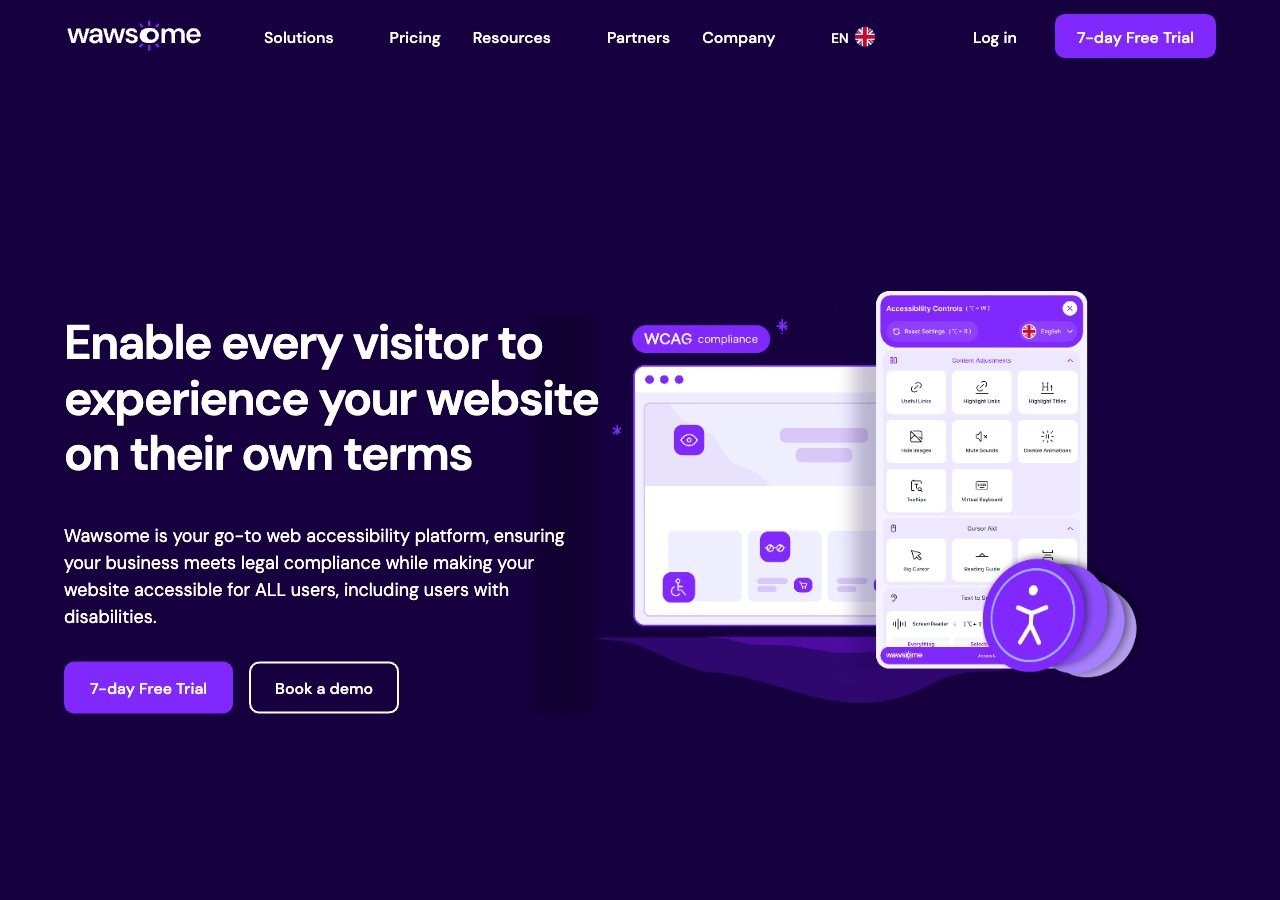
Jego własne materiały wyraźnie deklarują mapowanie dla rynku włoskiego obok siedmiu innych krajów europejskich, a do widżetu dołącza ręcznie weryfikowany moduł kontrolny. Warto porównać go bezpośrednio z lokalną specjalizacją AccessiWay przed podjęciem decyzji.
Zobacz zalety i wady
Zalety
- Publishes exact widget and monitoring prices on its site rather than hiding them behind a sales call
- Pairs the widget with a separate continuous-monitoring product and a human-reviewed accessibility checker instead of automation alone
- Explicit EAA and EN 301 549 mapping across multiple EU markets, ahead of most US-headquartered competitors on European regulation
- One-line JavaScript install with native Shopify, WordPress and Google Tag Manager support
Wady
- Requires a separate paid subscription for each subdomain, which can raise the effective cost for sites split across shop./blog./app. style subdomains
- Newer, smaller vendor with little independent review history on sites like G2 or Capterra compared to established competitors
- Like all overlay-widget products, an AI-adjusted layer cannot substitute for full manual code remediation on complex sites
- Enterprise-tier pricing for the widget and monitor is not published and requires contacting sales
Od From EUR 23.75/mo (billed yearly) or EUR 29.90/mo (billed monthly) for the Starter widget plan, up to 100k monthly page views; a separate Accessibility Monitor product starts at EUR 27.90-34.90/mo for 50 pages
-

Specjalista regionu DACH (Niemcy i Austria), którego pokrycie EAA i EN 301 549 dość dobrze przekłada się na Włochy, choć jego pozycjonowanie rynkowe i doświadczenie w sektorze publicznym zbudowane są konkretnie wokół krajów niemieckojęzycznych, a nie Włoch.
Zobacz zalety i wady
Zalety
- Deep specialization in German BITV 2.0 public-sector procurement requirements alongside the wider EAA
- Combines the Assist widget with a documented, standby expert team for troubleshooting rather than automation alone
- GDPR-compliant by design and reviewers note installation takes only minutes
- Independent reviewers give it a solid 4.4/5 overall expert score
Wady
- Pricing is no longer published anywhere on its site; every quote requires a demo or sales call
- Independent reviewers explicitly describe it as "quite expensive" relative to comparable widgets
- No live chat support, only phone, email and contact forms
- Public review volume is limited, so independent sentiment data is thinner than for larger competitors
Od Pricing not published - Eye-Able no longer lists prices on its site and requires a demo or sales call for a quote
-
Narzędzia zorientowane na programistów, zbudowane na open source'owym silniku axe-core, z szeroką dokumentacją WCAG i EN 301 549. Mocne dopasowanie do włoskiego zespołu inżynieryjnego, który chce naprawiać problemy w kodzie, mniej odpowiednie dla podmiotu publicznego szukającego prowadzonego doradztwa lokalnego.
Zobacz zalety i wady
Zalety
- axe-core, the free open-source engine Deque built and maintains, has been downloaded billions of times and underpins many competitors' own scanners
- Broadest standards coverage of any tool reviewed here: WCAG 2.0 through 2.2, Section 508 and EN 301 549, plus deep involvement in W3C standards work
- Reviewers report a very low false-positive rate compared to other automated scanners
- CI/CD and IDE integrations let engineering teams catch issues before code ships, rather than only after launch
Wady
- No consumer-facing overlay widget, so it doesn't offer the quick, no-developer-needed fix that widget vendors sell
- Pro and Enterprise pricing is not published; reported per-developer seat costs (roughly $1,250/yr for Pro, per third-party trackers) can add up for larger teams
- axe Monitor and axe Auditor are sold as separate line items on top of DevTools, adding cost and complexity
- Automated testing (including axe-core) only catches a minority of WCAG issues by design; full coverage still requires the paid manual-audit services
Od axe-core: free (open source). axe DevTools Extension: free tier available, with a Pro seat reported by third-party pricing trackers at roughly $1,250/yr per developer. axe Monitor and full axe DevTools for Web/Enterprise pricing is not published - contact sales
Dlaczego lokalna obecność ma tu znaczenie
Własny tekst marketingowy dostawcy, głoszący „ogólnounijne pokrycie” albo „wyraźne mapowanie dla Twojego kraju”, jest wart mniej niż niezależnie weryfikowalny fakt, taki jak adres siedziby czy udokumentowana specjalizacja prawna, dlatego AccessiWay zajmuje pierwsze miejsce mimo że własna dokumentacja Wawsome zawiera podobnie szerokie deklaracje. Badanie WebAIM Million z 2026 roku wykazało, że 95,9% stron głównych miało co najmniej jeden wykrywalny błąd WCAG, co przypomina, że niezależnie od wybranego dostawcy warto zweryfikować jego deklaracje na własnej witrynie, a nie na stronie sprzedażowej.
Co dalej
O ogólnounijnych ramach prawnych, obok których dziś funkcjonuje Stanca Act, przeczytasz w naszym przewodniku po Europejskim Akcie o Dostępności.